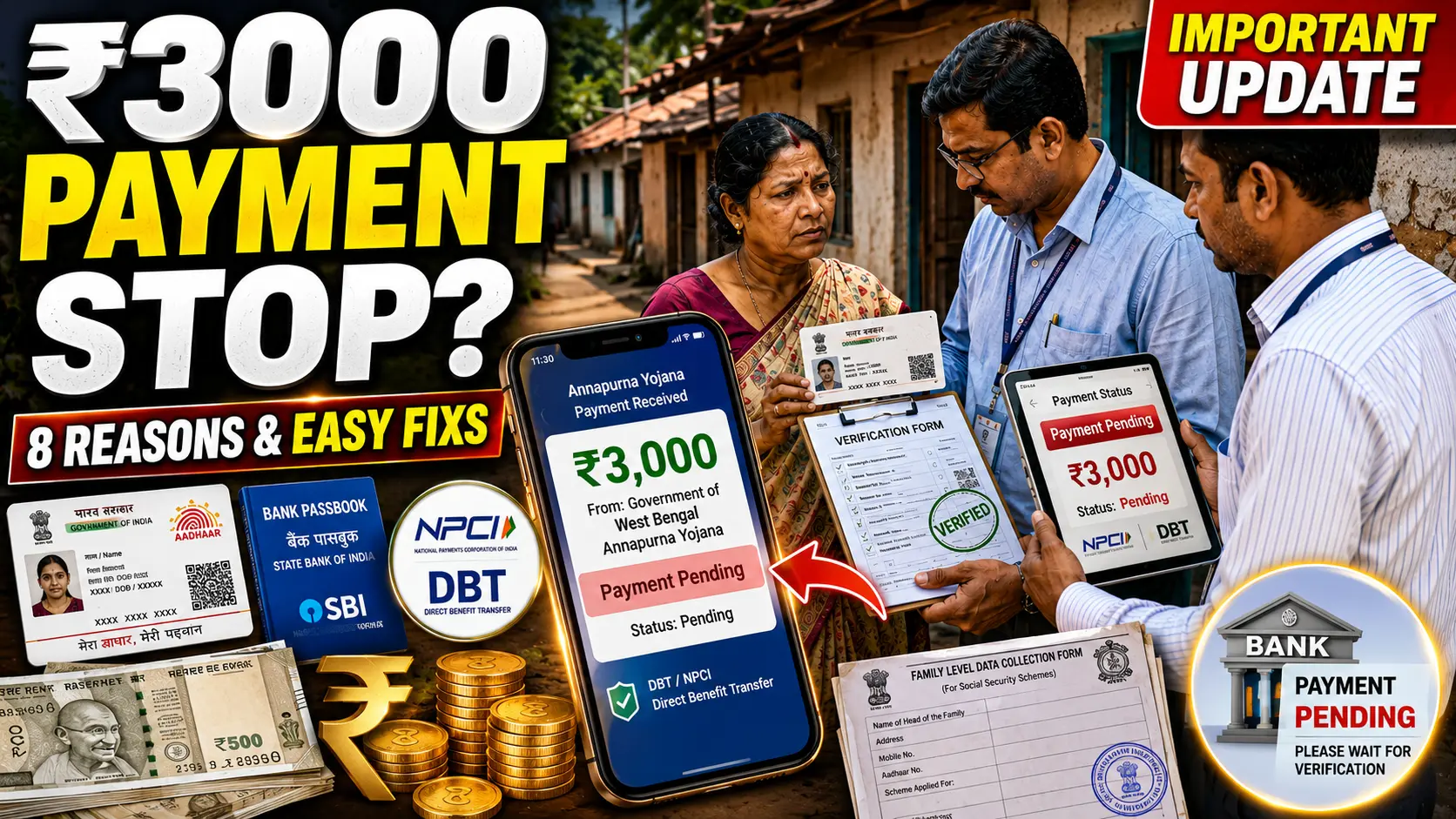

If you’ve applied for the Annapurna Yojana, the next 24 hours matter a lot. The state government has reportedly wrapped up verification on over 1 crore applications, and payments are scheduled to start landing in bank accounts on 1 July. Before you assume your ₹3,000 is on the way, though, it’s worth understanding exactly how the approval system works, because not every applicant will be paid in this first round. In this guide, we’ll walk through everything from the scrutiny process to the exact steps for checking your status online.
What’s Happening With Annapurna Yojana Before 1 July
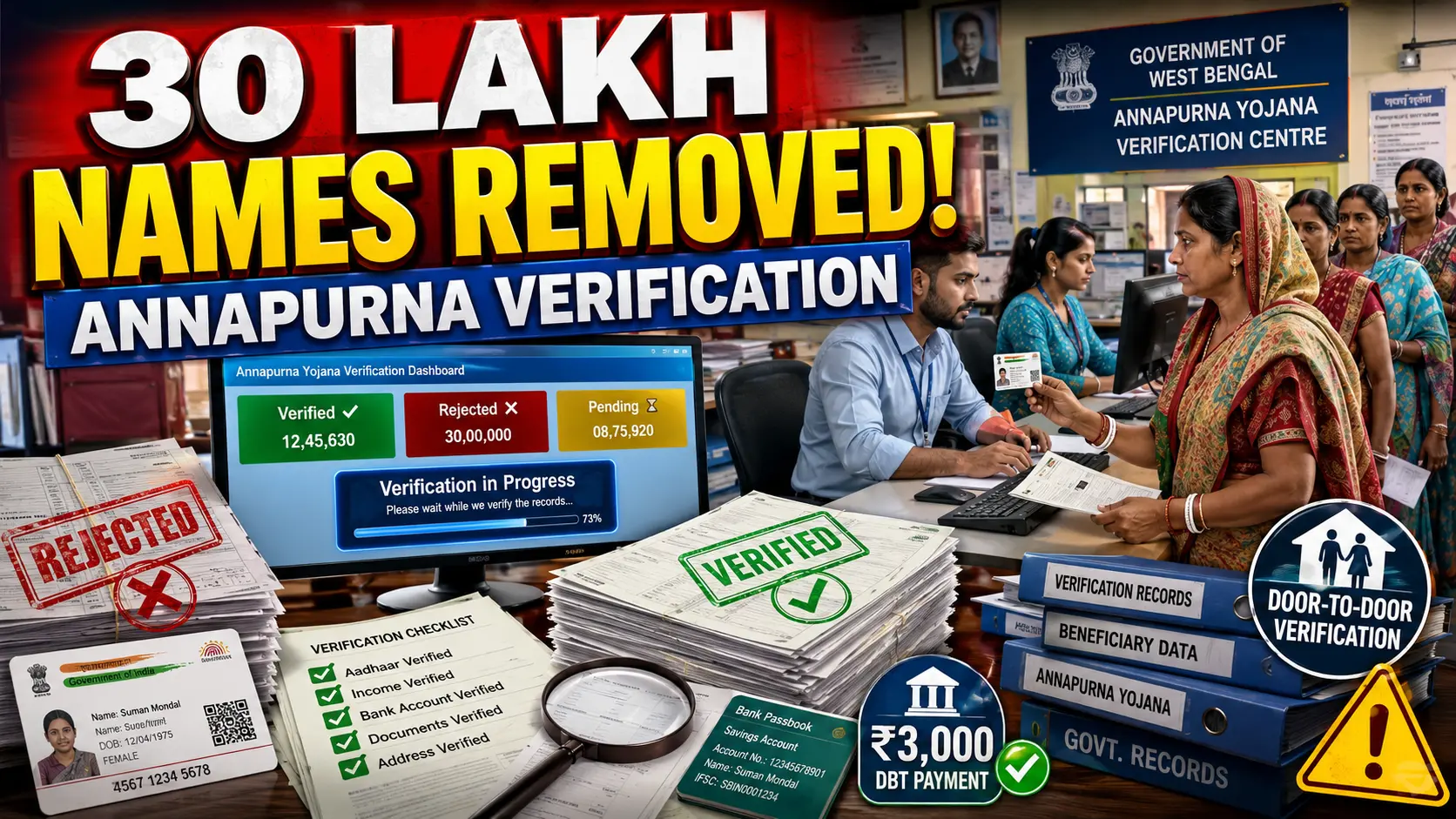
Government departments rarely move this fast on welfare rollouts, but the Annapurna Yojana has seen unusually quick administrative action over the past few weeks. According to reports, scrutiny of more than 1 crore applications has now been completed, which means officials have gone through each applicant’s documents, bank details, and eligibility one by one. As a result, the state is preparing to release the first installment of ₹3,000 to eligible beneficiaries on 1 July.
That said, a payment date alone doesn’t guarantee a payment. Officials have been clear that this round will only cover applicants whose files were fully verified and whose bank accounts are properly set up for Direct Benefit Transfer (DBT). Therefore, if you haven’t checked your status yet, doing so now, rather than waiting until 1 July, is the smarter move. Moreover, with such a large volume of applications being processed at once, even small errors in personal details can affect whether your name appears on the final approved list.
It’s also worth remembering that this scheme has generated massive public interest precisely because of its scale. Crores of families across the state are watching this rollout closely, since for many households, this ₹3,000 represents meaningful support toward monthly expenses. Consequently, understanding the process now, rather than scrambling on 1 July itself, puts you in a much better position.
| Feature | Details |
|---|---|
| Scheme Name | Annapurna Yojana |
| Applications Reviewed | Reportedly over 1 crore |
| Payment Amount | ₹3,000 (one-time, first installment) |
| Expected Payment Date | 1 July |
| Payment Mode | Direct Benefit Transfer (DBT) |
| Status Check | Social Security Portal, OTP-based login |
| Devices Supported | Smartphone and laptop |
How the Approval System Actually Works
Unlike a simple bank transfer, this scheme runs entirely through a verification-first model. In other words, your name doesn’t get added to the payment list automatically just because you submitted an application. Instead, every applicant moves through a scrutiny stage, and the outcome of that stage decides whether money reaches your account on time, later, or not at all.
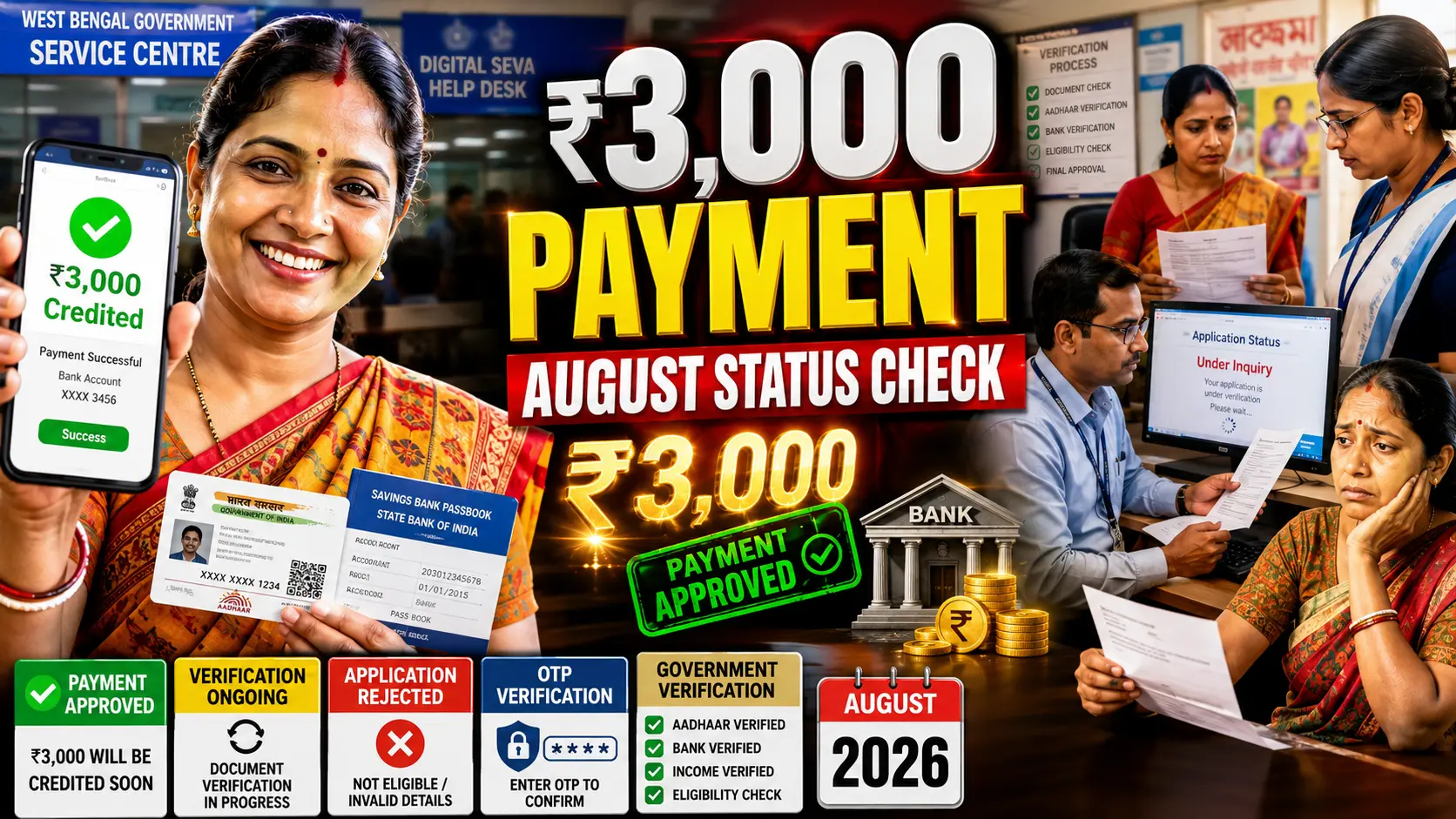
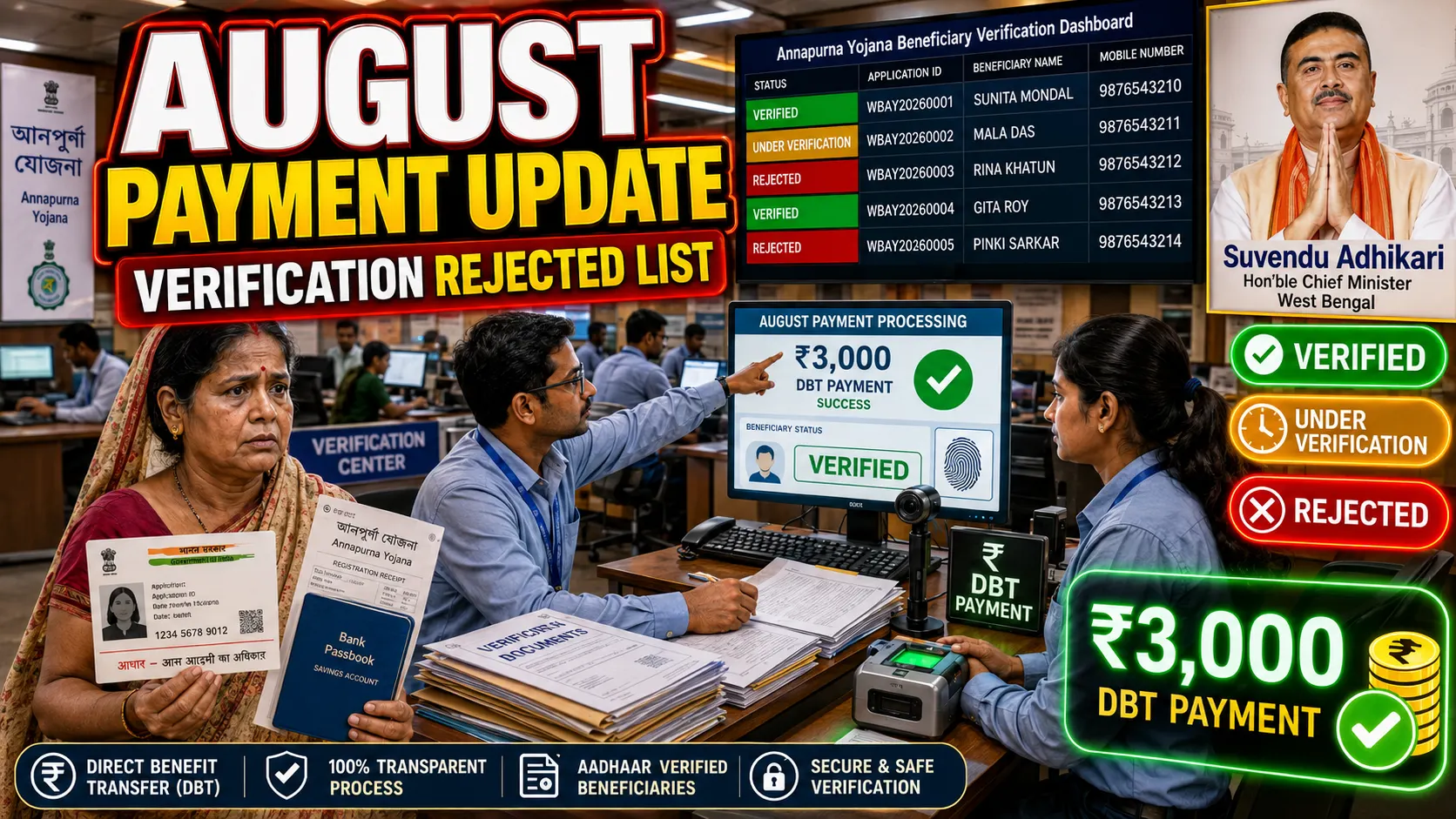
Once scrutiny is complete, your file lands in one of three buckets. If everything checks out, your documents are marked approved and your account becomes eligible for the DBT credit. However, if officials spot a mismatch, say, your Aadhaar details don’t quite match your bank KYC, your file gets flagged for re-verification instead of outright rejection. This isn’t necessarily bad news, but it does mean a delay, since payment won’t process until the recheck is finished. Meanwhile, applications with clear errors, like fake documents or incorrect personal details, get rejected entirely and won’t be eligible for this installment at all.
Understanding this three-tier system matters because it changes how you should react to your result. An approved status means you’re essentially done, though it’s still worth confirming your bank details one more time. A pending status, on the other hand, calls for action on your part, since the delay could stem from something as simple as a typo in your application form. Additionally, a rejected status doesn’t necessarily mean the end of the road; many schemes allow for resubmission once the original issue is corrected, so it’s worth following up at your local office rather than assuming there’s no recourse.
Annapurna Yojana Status Check: Step-by-Step
Thankfully, you don’t need to visit any government office to find out where you stand. The entire process happens online, and it takes just a few minutes from your phone.
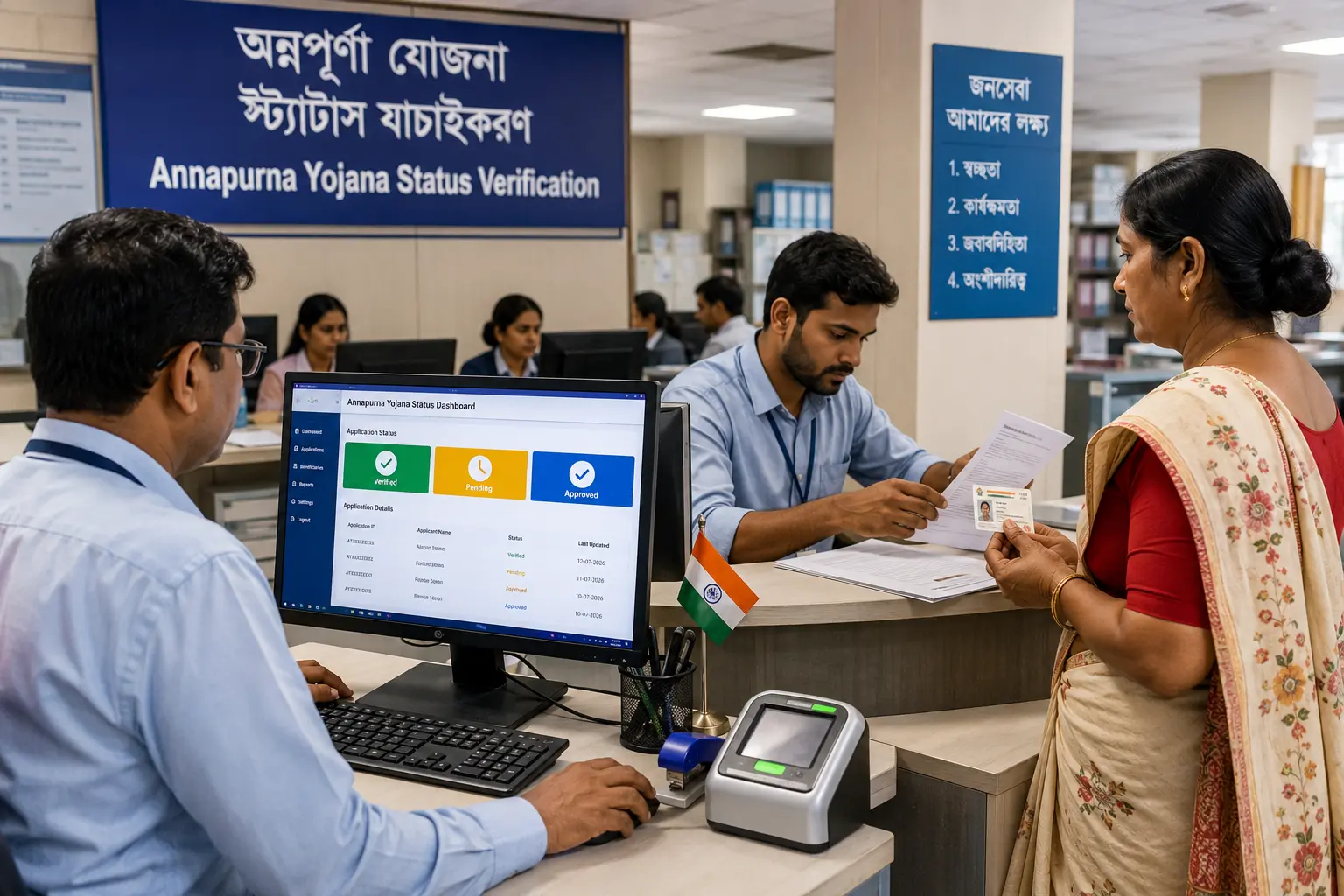
First, open the Social Security Portal on your smartphone or laptop. Next, enter your registered mobile number, since the system uses OTP verification to confirm your identity before showing any application details. Once you receive the OTP, enter it carefully, as repeated failed attempts can sometimes lock you out temporarily for security reasons. After logging in, look for the application or beneficiary status section, where your current standing, approved, pending, or rejected, will be displayed clearly on your dashboard.
If you’re unsure how to navigate the portal, most district offices and BDO counters can also help you check manually, though doing it online is generally faster and saves you a trip. Furthermore, keeping a screenshot of your status page can be useful, especially if you need to raise a query later or visit an office for clarification. It’s a small step, but it can save considerable back-and-forth if there’s ever a dispute about what status your application actually showed.
For those less comfortable with smartphones, laptops work just as well, and the interface remains largely the same across devices. Therefore, whether you’re checking from a cyber café, a family member’s laptop, or your own phone, the steps stay consistent. This flexibility was clearly built into the system to ensure that even applicants in areas with limited smartphone access can still verify their status without much hassle.
Why DBT Linkage Matters More Than Most People Realize
Here’s something many applicants overlook: an “approved” status doesn’t automatically mean the money will land in your account. This scheme pays out strictly through DBT, which means your bank account needs an active Aadhaar-DBT link for the transfer to go through at all. If that link is missing, inactive, or mapped to the wrong account, the system will block the transaction, even for fully approved applicants.
This is a far more common issue than people assume. Many beneficiaries open bank accounts years before any scheme is even announced, and over time, mobile numbers change, KYC details lapse, or accounts simply go dormant due to inactivity. As a result, even someone who filled out their application perfectly can still face a failed transfer simply because their bank-side details fell out of sync.
So, before 1 July arrives, it’s worth taking five minutes to confirm two things with your bank: that your Aadhaar is seeded to your account, and that DBT is switched on. You can usually do this by visiting your bank branch directly, or in some cases, through your bank’s mobile app under the KYC or Aadhaar-linking section. Doing this now can save you from a frustrating delay later, especially since reversing a failed transaction usually takes far longer than fixing the link in the first place. Additionally, if you recently switched banks or updated your mobile number, double-checking this becomes even more important, since outdated records are one of the leading causes of payment failures in DBT-based schemes.
Common Reasons Applications Get Delayed or Rejected
While every case is different, a few patterns tend to repeat across large-scale verification drives like this one. Firstly, mismatched names, where your name on the application doesn’t exactly match your Aadhaar or bank records, frequently cause delays. Even small differences, like a missing middle name or a spelling variation, can trigger manual review. Secondly, outdated mobile numbers create problems during OTP verification, since the system can’t confirm your identity if your registered number is no longer active.
Thirdly, incomplete document uploads remain one of the most avoidable issues. Applicants sometimes submit blurry scans or skip a required document entirely, which automatically pushes their file into the pending category. Lastly, joint bank accounts, where the scheme requires a single-holder account, often lead to rejection, since DBT systems are generally built to credit funds into individually held accounts rather than shared ones.
Knowing these common pitfalls in advance can help you avoid them altogether if you’re still in the process of correcting your application. Moreover, if your status shows pending and you suspect one of these issues applies to you, addressing it proactively, rather than waiting for an official notice, can speed up your resolution considerably.
What You Should Do Right Now
Given the scale of this rollout, with crores of applicants expected to check the portal in the next day, server load is likely to spike closer to 1 July. Consequently, checking your status today, rather than at the last minute, gives you more breathing room to fix any issues if something looks wrong.
Additionally, if your status shows pending, don’t panic, but don’t ignore it either; reach out to your local BDO or municipal office for clarity rather than assuming it will resolve on its own. Carry your acknowledgment receipt and any supporting documents with you, since officials will likely need these to look up your case. On the other hand, if your application shows as rejected, ask specifically what went wrong, since this information determines whether you need to resubmit, correct an error, or simply wait for the next verification cycle.
It also helps to keep your expectations realistic. Even in well-run rollouts, technical glitches and last-minute server issues are common when crores of people attempt to access a portal simultaneously. Therefore, if the portal feels slow or unresponsive close to the payment date, trying again a little later, rather than repeatedly refreshing, often works better.
| Status Type | What It Means | What To Do |
|---|---|---|
| Approved / Verified | Documents passed scrutiny, DBT activated | Confirm bank-DBT link is active; no further action needed |
| Pending Verification | Documents under re-check due to a discrepancy | Visit local office or correct details online if possible |
| Rejected | Incorrect information or invalid documents found | Ask for the specific reason and inquire about resubmission |
Final Thoughts Before 1 July
Overall, the Annapurna Yojana rollout represents a fairly structured attempt at large-scale digital welfare delivery, but as with any system handling over a crore applications, individual outcomes can vary. Therefore, treating 1 July as a checkpoint rather than a guarantee makes sense, since your actual payment depends entirely on how your specific application moved through scrutiny.
In the meantime, the most useful thing you can do is verify your status today, confirm your bank account’s DBT status, and keep your acknowledgment details handy in case you need to follow up. These three small steps take very little time but can make a real difference in whether your payment goes through smoothly on the first attempt.
SEE ALSO: Annapurna Scheme Application Rejected? Women Protest in Murshidabad
Note: The payment date, application figures, and verification status mentioned here are based on currently available reports. Readers are advised to confirm these details through official government channels or the Social Security Portal before treating them as final.