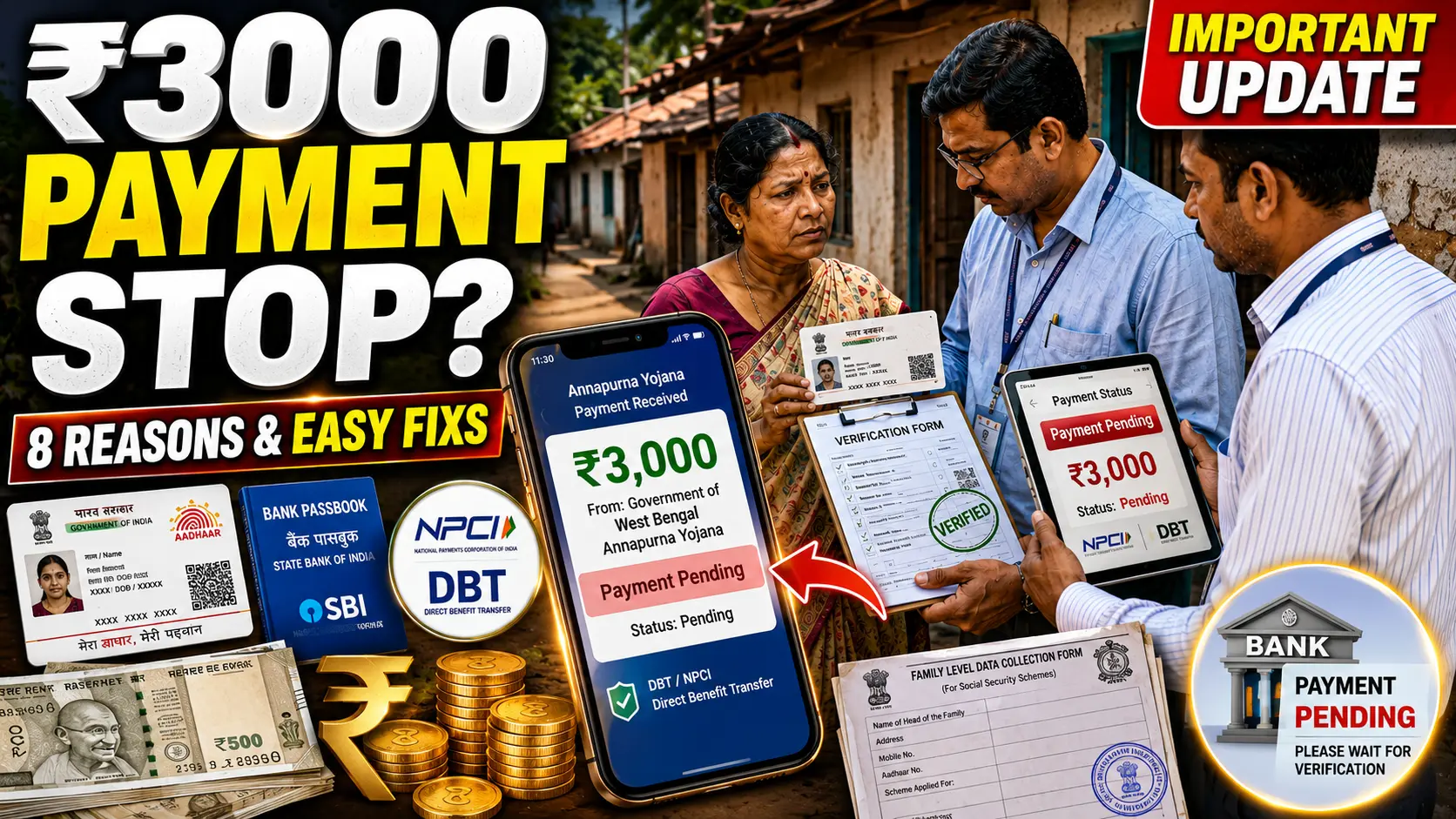

West Bengal’s new Chief Minister Suvendu Adhikari is making headlines with some bold and strict welfare reform decisions. His government has rolled out a fresh set of eligibility rules that could bar millions from receiving government benefits. From marital history to child vaccination status, the new criteria are drawing massive public attention across the country. Here is everything you need to know about these new rules and what they mean for Bengal’s welfare future.
Suvendu Adhikari Government Introduces Strict Welfare Eligibility Rules in West Bengal
West Bengal Chief Minister Suvendu Adhikari has officially announced a tough new framework to filter who qualifies for government welfare benefits. According to the announcement, these benefits are meant strictly for “genuinely eligible and needy” individuals. Moreover, the government has made it clear that it will not tolerate misuse of public funds through ineligible claimants.
Additionally, this move comes right after the Bengal government replaced the popular Lakshmir Bhandar scheme with its new Annapurna Yojana. Consequently, the eligibility overhaul directly impacts how thousands of households will receive financial support going forward.
Who Gets Disqualified? Complete List of Exclusion Criteria
The Suvendu Adhikari-led government has introduced four major disqualification categories. Furthermore, these rules apply to all new applicants seeking benefits under the restructured welfare system.
| Disqualification Category | Details |
|---|---|
| Marital Status | Individuals married three or more times are barred from benefits |
| Vaccination Refusal | Parents who refuse government-mandated child vaccination are excluded |
| School Dropouts | Families whose children left government schools for certain religious institutions lose allowances |
| Non-Citizens | Individuals verified as non-Indian citizens are completely ineligible |
In addition to these four rules, the government is actively working to verify existing beneficiary records. Therefore, even current recipients could face disqualification if they fail to meet the new standards.
Annapurna Yojana Application Form: What You Must Declare
The new Annapurna Yojana application form runs across 11 pages, and page 8 specifically asks applicants to declare the vaccination status of up to four children. Moreover, applicants must mention the type of school each child attends, whether it is a government school, government-aided institution, private school, or madrasa.
Furthermore, these vaccinations fall under the Universal Immunisation Programme (UIP), a central government initiative that provides free vaccines against 12 life-threatening diseases. Therefore, skipping your child’s vaccination is no longer just a health concern but also a direct financial risk for the household.
Verification Drive Targeting 30 Lakh Ineligible Beneficiaries
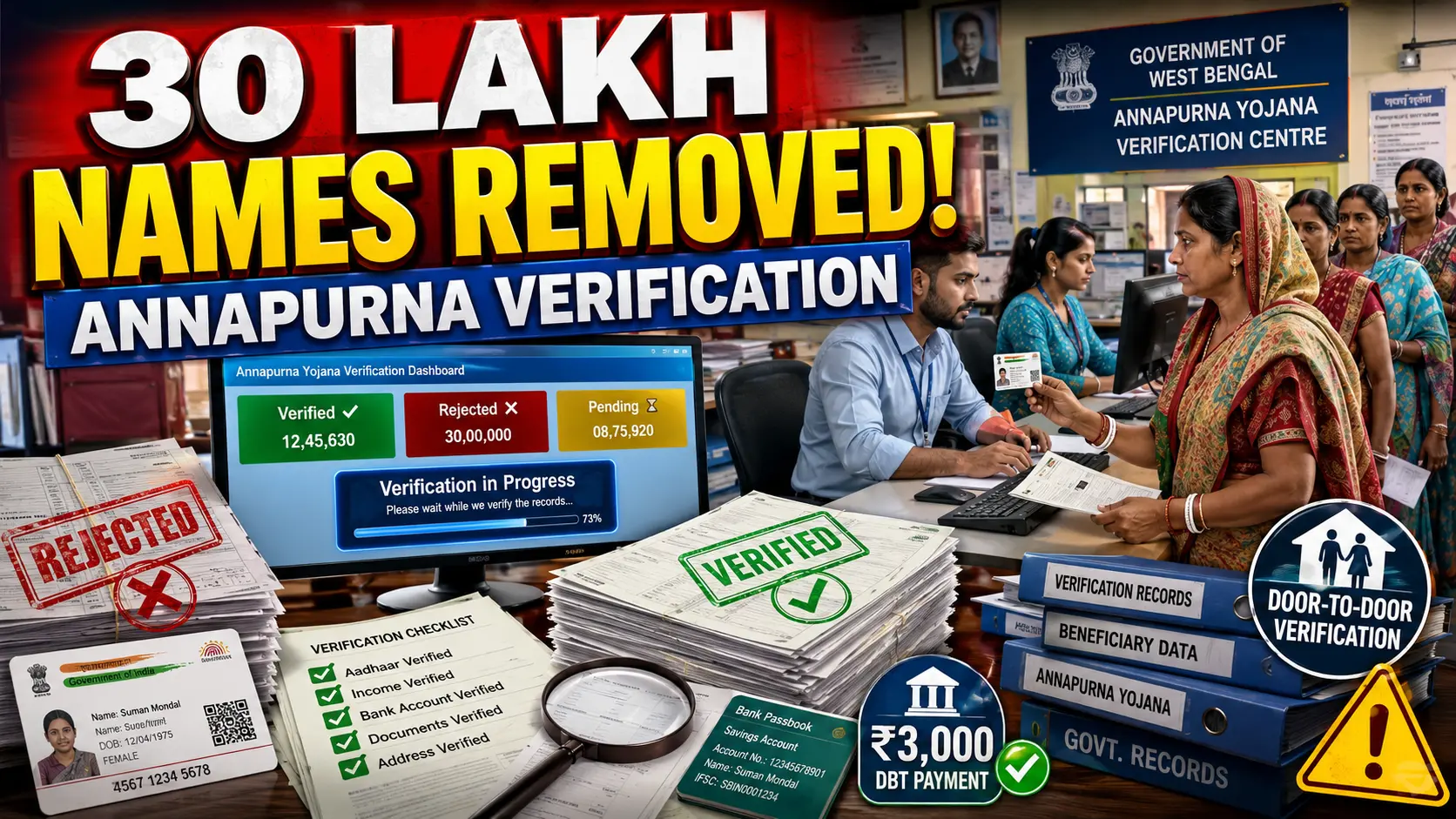
The Bengal government has launched a major statewide verification drive to identify nearly 30 lakh allegedly ineligible welfare recipients. Additionally, all new application forms now require detailed personal declarations, including Aadhaar card information, ration card details, property ownership status (land, house, and car), and whether any family member holds a government job.
Consequently, this crackdown aims to redirect welfare funds only toward those who genuinely need them. Meanwhile, applicants who submit incomplete or false declarations risk immediate disqualification from all state welfare schemes.
Annapurna Yojana: Higher Cash Benefits for Eligible Women
On the positive side, eligible women who clear the new criteria will receive significantly better financial support under the Annapurna Yojana. Specifically, the monthly cash transfer has been raised to Rs 3,000 for approved households. In addition, all eligible women will receive free travel on state-run buses, making daily commuting much more affordable.
Moreover, this restructured scheme integrates several central government programmes into the state system. These include Ayushman Bharat for healthcare coverage, the Pradhan Mantri Cha Shramik Protsahan Yojana for tea garden workers, and the VB-GRAM G Programme designed for rural households. Therefore, eligible families now stand to gain access to a much wider safety net than before.
Religion-Based Welfare Schemes Officially Discontinued
In a significant policy shift, the Bengal state cabinet has officially discontinued all financial assistance schemes based on religion. Specifically, this includes programmes previously operating under the Madrasa and Information and Cultural Affairs departments. Furthermore, the government has stated that welfare distribution will now follow a uniform, need-based approach rather than community-specific criteria.
Additionally, the West Bengal Public Safety and Control of Anti-Social Activities Bill has granted the government stronger powers to penalise or detain individuals accused of disrupting public order. Meanwhile, new zoning rules now prohibit liquor shops from operating within one kilometre of schools, colleges, temples, and mosques. Consequently, these sweeping changes signal a major shift in how the Bengal government intends to govern going forward.
Key Welfare Policy Changes at a Glance
| Policy Area | New Rule or Change |
|---|---|
| Cash Transfer for Women | Increased to Rs 3,000 per month under Annapurna Yojana |
| Bus Travel | Free travel on state-run buses for eligible women |
| Religion-Based Schemes | All discontinued by state cabinet |
| Verification Drive | Targeting around 30 lakh ineligible beneficiaries |
| Central Schemes Integrated | Ayushman Bharat, PM Cha Shramik Yojana, VB-GRAM G |
| Liquor Shop Zoning | Banned within 1 km of schools, colleges, temples, mosques |
What These Welfare Reforms Mean for West Bengal’s Future
Overall, the Suvendu Adhikari government’s welfare overhaul reflects a strong intent to bring discipline and accountability into Bengal’s social spending. Furthermore, by linking benefits to vaccination compliance and school attendance, the government is pushing families toward better health and education outcomes simultaneously. However, critics argue that some of these criteria could unfairly target minority communities, making the political debate around these reforms highly charged.
Nevertheless, supporters believe this is a necessary step to ensure that public money reaches the people who truly need it. Therefore, how effectively the state implements and monitors these new rules will determine whether these reforms truly uplift Bengal’s most vulnerable citizens or create new barriers for them.
Disclaimer: This article is based on publicly available reports regarding the Annapurna Yojana. The administrative inquiry is ongoing, and official findings may change as further information becomes available.