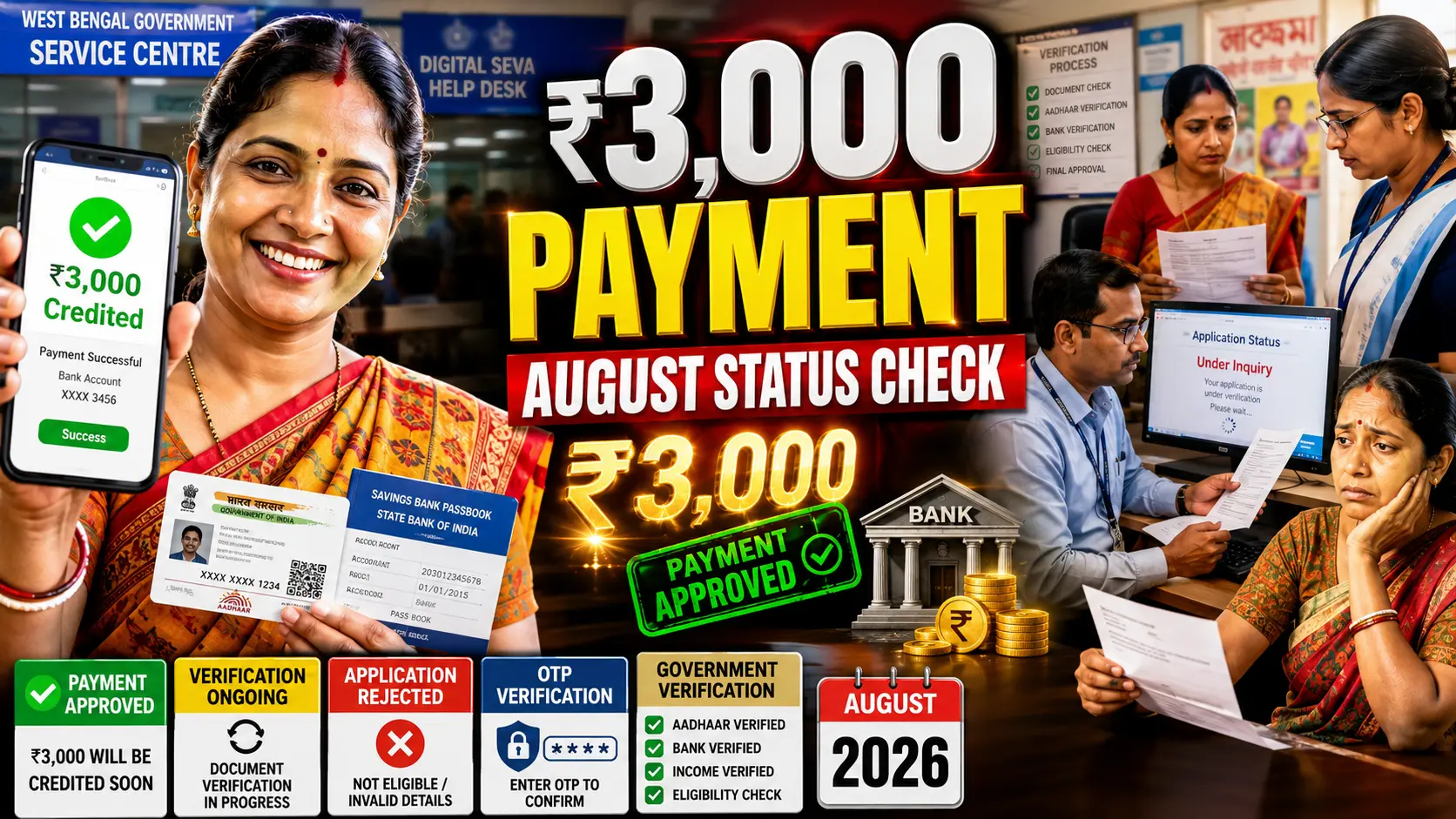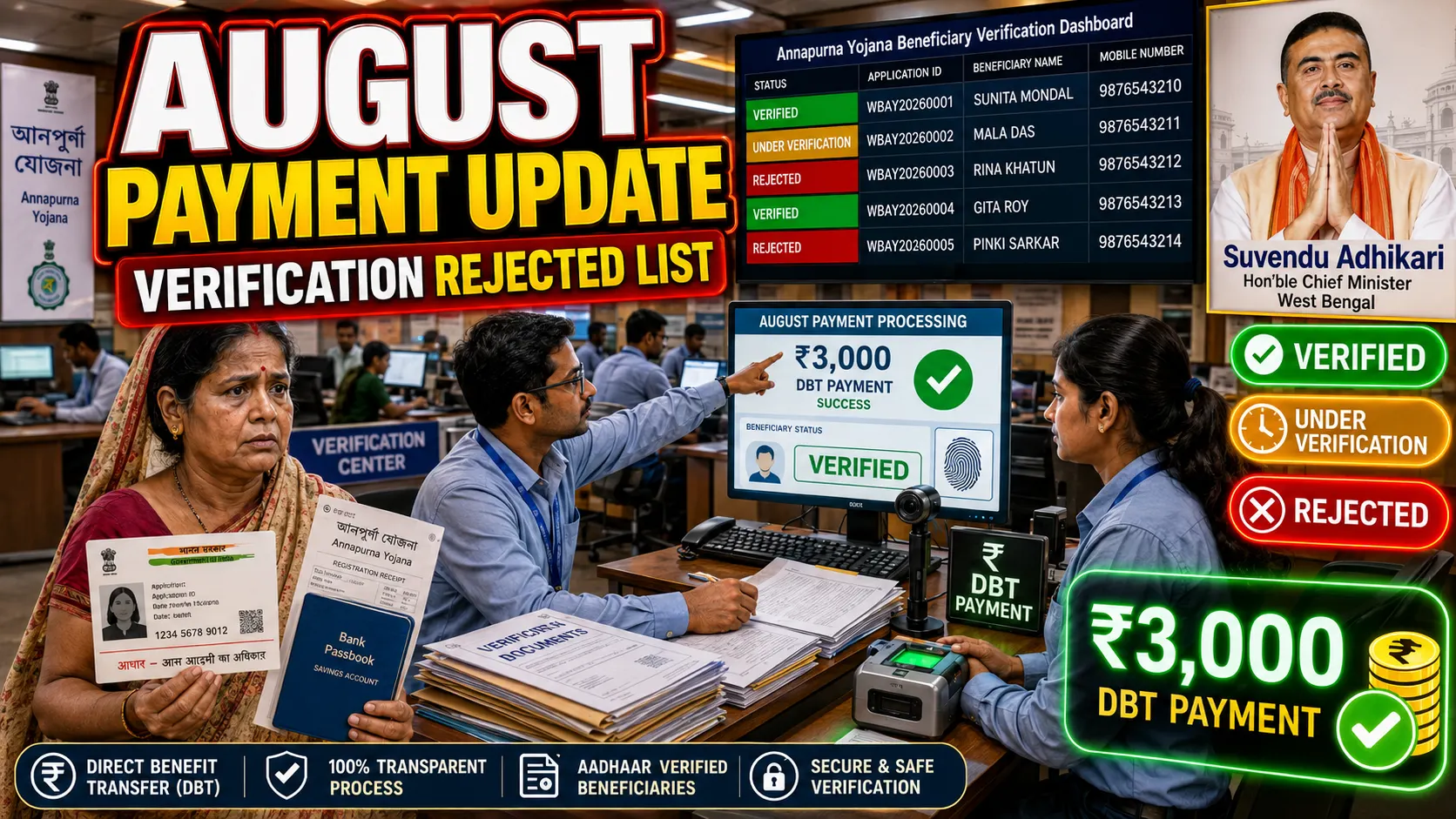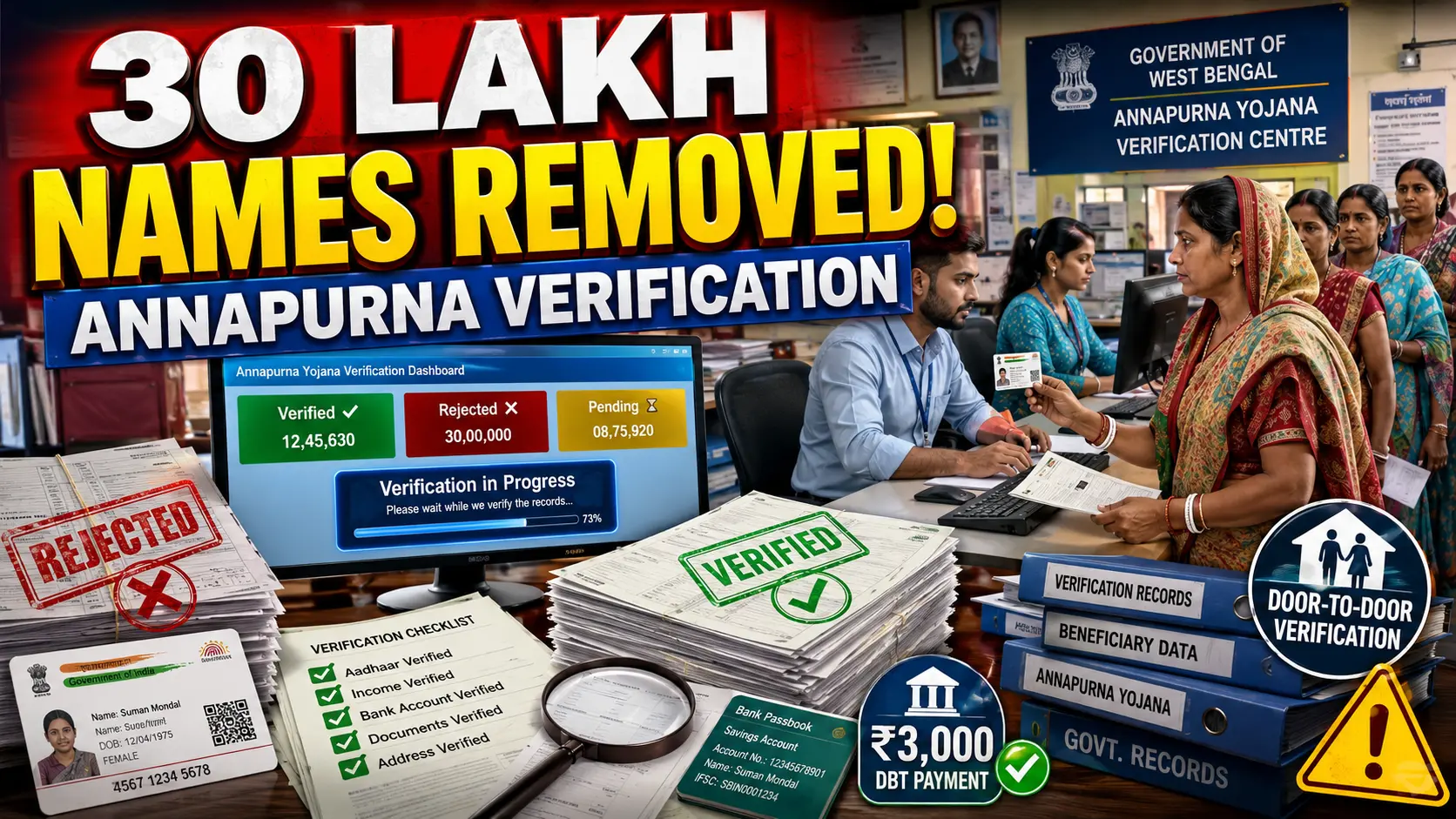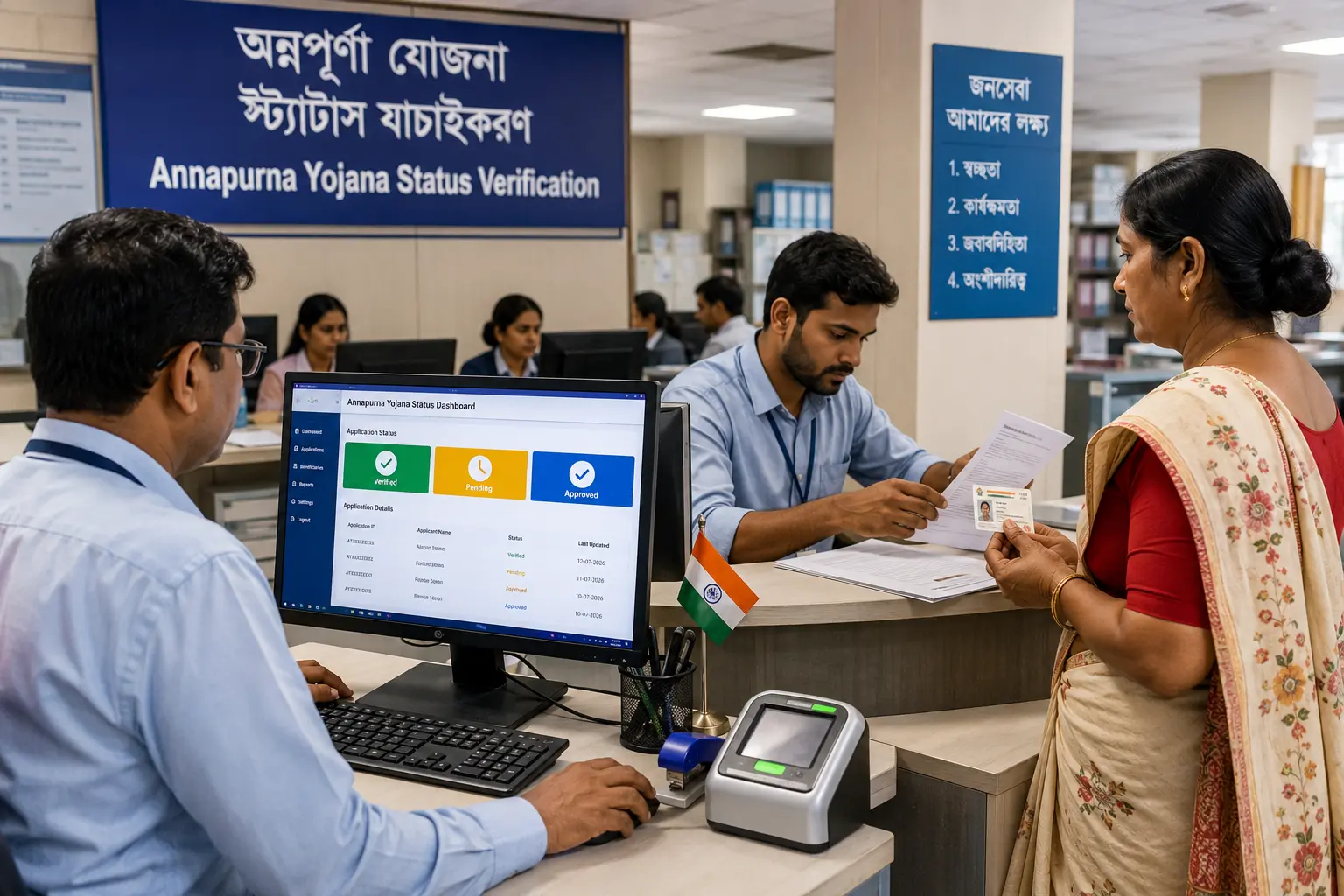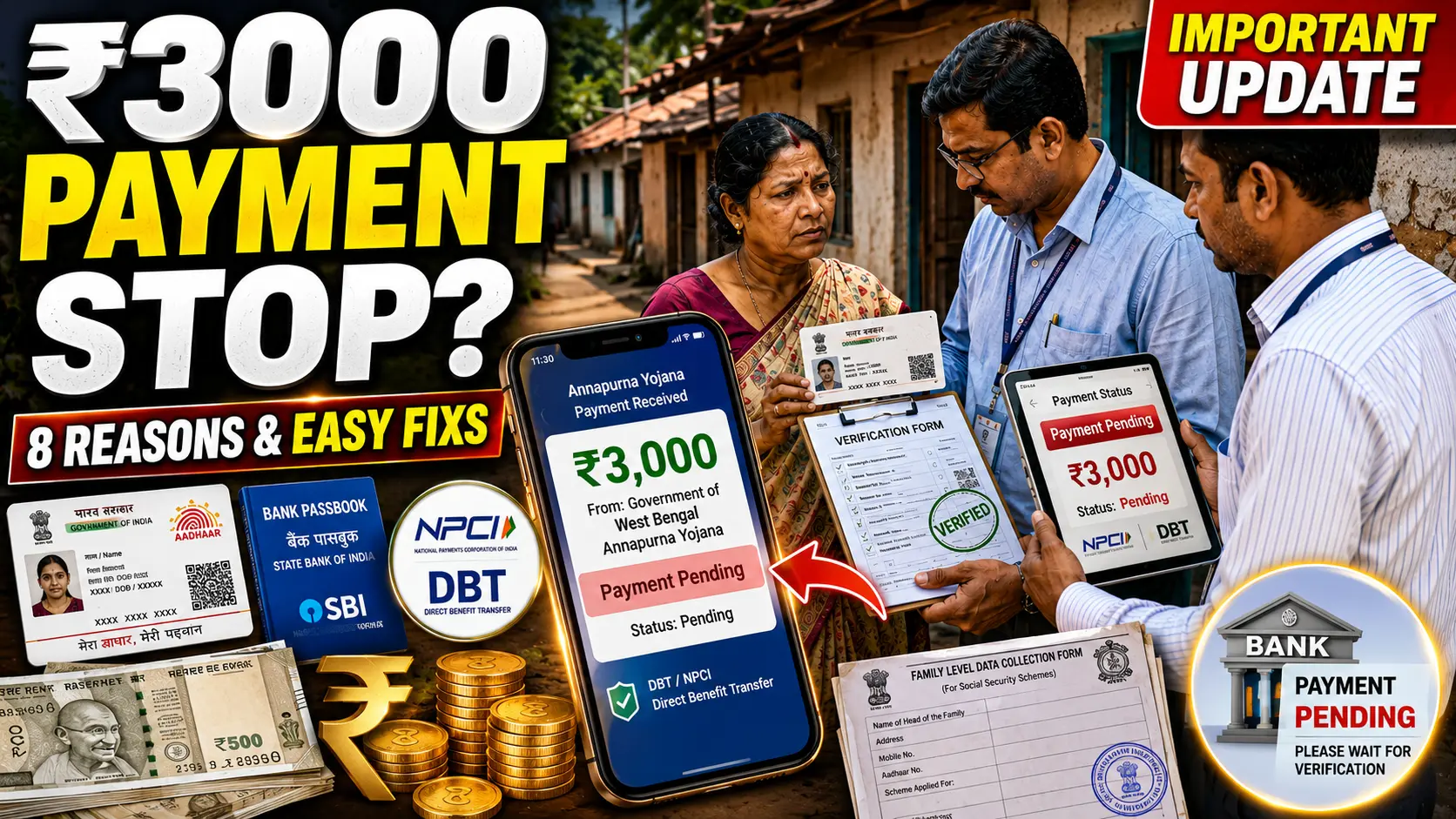

The West Bengal government has officially kicked off the door-to-door verification process for the Annapurna Yojana, and every eligible applicant needs to pay close attention right now. If your application status currently shows “Rejected” or “Under Inquiry,” do not panic because this re-verification drive is specifically designed to help genuine beneficiaries like you. The government is making sure that no deserving person misses out on the Rs 3,000 financial assistance due to minor technical or documentation errors. Moreover, Anganwadi workers have already started visiting homes across the state, so keeping your documents ready at this moment is absolutely essential. Additionally, this is one of the most important welfare updates of 2025 for millions of families in West Bengal who are depending on this direct financial support.
What Is the Annapurna Yojana and Why Does It Matter
The Annapurna Yojana is a state government welfare scheme launched by the West Bengal administration to provide direct financial assistance of Rs 3,000 to economically weaker families. Furthermore, this scheme targets households that do not have a stable income source and are genuinely in need of government support. The primary goal of this initiative is to make sure that essential financial help reaches the most vulnerable sections of society without any delays or middlemen involved.
Moreover, the scheme operates through the Direct Benefit Transfer system, which means the Rs 3,000 amount gets deposited directly into the verified beneficiary’s linked bank account. Consequently, this eliminates corruption and ensures that every rupee reaches the right person. In addition, the current verification drive is a crucial step in making this entire process transparent, fair, and efficient for all applicants across West Bengal.
What Is the Annapurna Yojana Door-to-Door Verification Drive All About
The West Bengal administration has launched a large-scale door-to-door verification campaign to confirm the eligibility of all Annapurna Yojana applicants before releasing the Rs 3,000 direct bank transfer. Additionally, this entire process is being supervised by district-level officials to ensure transparency and accuracy at every single step. Anganwadi workers have been given the official responsibility of visiting applicants at their homes, collecting information, and submitting field reports directly to administrative centers.
Furthermore, applications that were previously marked as “Application Rejected” or “Under Inquiry” are being re-examined carefully and fairly. The administration has clearly stated that these rejections may have happened due to KYC mismatches, documentation gaps, or simple technical glitches in the portal. Therefore, this re-verification process gives every genuinely eligible person a fair second chance to receive the benefit they truly deserve. Meanwhile, thousands of applicants across various districts have already had their documents verified successfully at their homes during the first phase of this drive.
What Will the Officials Check During Annapurna Yojana Verification
When an Anganwadi worker or government official visits your home for the Annapurna Yojana verification, they follow a clear and structured step-by-step checking process. Moreover, every single step is important because even one mismatch or missing document can delay your Rs 3,000 benefit. Therefore, understanding exactly what officials check during their visit will help you stay fully prepared and avoid unnecessary complications on the spot.
Step 1: Identity Verification Through Aadhaar and Voter ID
The very first thing the official will check is your identity. Therefore, you must keep your original Aadhaar card and voter ID card ready before they arrive. Moreover, the name, date of birth, and address on your Aadhaar card must exactly match the details you filled in your Annapurna Yojana application form. Additionally, if there is even a minor spelling difference between your Aadhaar and your application, it can raise a flag during verification. Consequently, checking these details yourself before the official visit is a very smart move that can save you a lot of trouble later.
Step 2: Bank Account and Passbook Details Check
After confirming your identity, the official will move on to verifying your bank account details. Furthermore, this step is extremely critical because the Rs 3,000 Annapurna Yojana amount will be sent directly to your bank account through the Direct Benefit Transfer system. Therefore, you must present your original bank passbook so that the official can physically verify your account number and IFSC code. Moreover, your bank account must be active, fully operational, and properly linked with your Aadhaar card. In addition, if your account is dormant or the Aadhaar seeding is incomplete, your payment will get stuck even after successful field verification. Consequently, visiting your bank branch before the official visit to confirm Aadhaar linkage is strongly advisable.
Step 3: Mobile Number Verification
Next, the official will verify the mobile number that you registered at the time of submitting your Annapurna Yojana application. Additionally, this step is important because the government sends all official SMS alerts and OTP messages related to your application status directly to this number. Therefore, make sure the mobile number you provided in the application is still active and in your possession during the verification visit. Moreover, if you have changed your number since applying, you should inform the official immediately so that the records can be updated accordingly. Furthermore, an inactive or wrong mobile number can create communication gaps that delay your benefit transfer significantly.
Step 4: Financial and Family Status Assessment
One of the most important steps in the entire verification process is the on-the-spot assessment of your family’s financial and economic condition. Moreover, the official will not rely only on your documents for this step. Instead, they will physically observe your living conditions, family size, and overall economic situation during the home visit itself. Furthermore, this direct assessment helps the administration confirm that the applicant genuinely belongs to the economically weaker section and truly needs the Rs 3,000 financial support. Therefore, be honest and straightforward when answering the official’s questions about your household income, employment status, and family situation. Consequently, any false information provided during this assessment can lead to immediate disqualification from the scheme.
Step 5: Cross-Checking Application Form Details
After completing the physical checks, the official will cross-verify all the information you provided in your original Annapurna Yojana application form. Additionally, they will compare the details on your documents with what is recorded in the digital portal to check for any inconsistencies or errors. Moreover, if your application was previously marked as “Rejected” or “Under Inquiry,” this step becomes even more important because the official will specifically look for the exact reason behind that status. Therefore, having your original application copy or acknowledgment slip ready during the visit will make this cross-checking process much smoother and faster. Furthermore, any errors found at this stage can be flagged for correction on the spot, which is actually a great opportunity for applicants with rejected status to get their cases resolved quickly.
Step 6: Checking Ineligibility Factors
Finally, the official will also check for specific factors that automatically make an applicant ineligible for the Annapurna Yojana benefit. Therefore, it is important to know these disqualifying factors in advance so there are no surprises during the visit. Moreover, the administration has clearly laid out who will not receive this benefit regardless of their application status.
| Ineligibility Factor | Reason for Disqualification |
|---|---|
| Income Tax Payer | Financially capable, not in the target group |
| Government Employee | Receives regular salary from the state or central government |
| Regular Pensioner | Already receiving fixed monthly pension income |
| CAA or Tribunal Documents | Under special legal scrutiny during verification |
| Mismatched Documents | Details do not match between application and original documents |
Furthermore, if the official finds any of these ineligibility factors during the home visit, your application will not proceed further for the Rs 3,000 benefit transfer. However, if you believe there has been a genuine mistake in your disqualification, you can approach your local Block Development Office for a formal review and appeal. Consequently, staying calm, cooperative, and transparent during the entire verification visit is the best approach for every Annapurna Yojana applicant in West Bengal
Documents You Must Keep Ready When Officials Visit Your Home
When an Anganwadi worker or government official knocks on your door, you need to be fully prepared with all required documents. Consequently, keeping the following original documents organized and ready will speed up your verification process and help you avoid any last-minute confusion or delays.
| Document Type | Details Required |
|---|---|
| Identity Proof | Aadhaar Card and Voter ID Card |
| Bank Details | Bank Passbook with Account Number and IFSC Code |
| Contact Information | Mobile Number Registered in the Application |
| Financial Status | On-the-spot review of family and economic condition |
| Application Reference | Original application copy or acknowledgment slip if available |
In addition to these documents, officials will also assess your overall financial situation during the home visit itself. Based on the field report prepared by the Anganwadi worker, a final decision will be made regarding your eligibility for the Rs 3,000 benefit. Moreover, the administration has clearly mentioned that income tax payers, government employees, and regular pensioners will not qualify for Annapurna Yojana benefits under any circumstances. Therefore, it is important to be honest and transparent during the verification visit so that the process goes smoothly and quickly.
Who Will Not Be Eligible for Annapurna Yojana Benefits
It is equally important to understand who falls outside the eligibility criteria for this scheme. Therefore, the administration has put out a clear and firm list of individuals who will be excluded from the Annapurna Yojana, regardless of their application status on the portal.
Income tax payers are strictly not eligible for this scheme under any condition. Similarly, individuals currently serving as government employees or drawing a regular government pension will also be disqualified automatically. Furthermore, documents connected to the Citizenship Amendment Act or tribunal-related cases are being placed under special scrutiny during this verification phase. On the other hand, applicants from economically weaker sections with no stable income source remain the primary and most deserving focus of this entire welfare initiative launched by the West Bengal government.
Offline Applications Are Now Being Digitized at a Rapid Pace
Meanwhile, the government is also working hard to accelerate the digitization of offline applications that were submitted physically at local offices. Dedicated teams are working continuously to upload this important data onto the central digital portal so that no applicant gets accidentally left behind due to the offline submission process. Additionally, all field data collected by Anganwadi workers each day is being submitted directly to administrative headquarters for immediate processing and review.
Consequently, the overall verification pipeline is becoming faster, more organized, and more efficient with each passing day. In addition, the administration wants to ensure that once the field verification wraps up completely, the Rs 3,000 Annapurna Yojana amount reaches every eligible beneficiary’s bank account without any further unnecessary delays. Therefore, both online and offline applicants are being treated equally in this process, which is a very positive sign for transparency.
What to Do If Your Status Shows Rejected But No Official Has Visited Yet
Many applicants are currently worried because their portal status shows “Rejected” but no official has visited their home yet. However, there is absolutely no need to panic or rush to any government office in this situation. The administration has clearly confirmed that verification is being carried out in phases, moving area by area, and every eligible household will eventually be covered under this drive.
Therefore, the smartest thing you can do right now is keep all your original documents safely organized and remain available at home during regular hours. Moreover, once the field report from your area is officially submitted by the Anganwadi worker, your portal status will automatically get updated to reflect the new and corrected verification outcome. In addition, you do not need to visit any government office separately unless specifically instructed to do so by local authorities. Furthermore, applicants are advised not to fall for any middlemen or agents who claim to fast-track the verification process for a fee, as this entire process is completely free of cost.
When Will the Rs 3,000 Amount Finally Be Credited to Bank Accounts
This is the most important question on every applicant’s mind right now. However, the government has not yet announced a specific fixed date for the final credit to bank accounts. Meanwhile, it is absolutely clear that the Rs 3,000 amount will only be transferred after the complete door-to-door verification process finishes and all field reports are carefully reviewed by the district administration.
Additionally, the funds will be sent through the Direct Benefit Transfer system, which means the money will land directly in the verified beneficiary’s Aadhaar-linked bank account with no middleman involved at any stage. Therefore, it is absolutely crucial to ensure that your bank account is active, properly linked with your Aadhaar card, and that the passbook details match exactly what you submitted in your original application. Moreover, any mismatch in bank account details can delay your payment even after the field verification is successfully completed. Consequently, double-checking your bank details right now can save you a lot of unnecessary waiting time later.
Final Advice for All Annapurna Yojana Applicants in West Bengal
In conclusion, the Annapurna Yojana verification drive is a very positive and important step taken by the West Bengal government to make sure that genuine and deserving beneficiaries receive their financial assistance without any further delays. Moreover, the involvement of Anganwadi workers and district-level supervision adds a strong layer of accountability and trust to this entire process. Therefore, every applicant should cooperate fully with visiting officials, keep documents ready, and stay patient as the process moves through different areas and phases.
Additionally, stay connected with official government portals and local administrative announcements for the latest updates on your application status. Furthermore, avoid sharing your personal Aadhaar or bank details with any unauthorized person claiming to be from the government. In addition, if you face any genuine issue during the verification process, you can approach your local Block Development Office or Panchayat office for guidance and support.
Consequently, with full cooperation from applicants and efficient work by field teams, the Rs 3,000 Annapurna Yojana benefit will soon reach every deserving family across West Bengal.