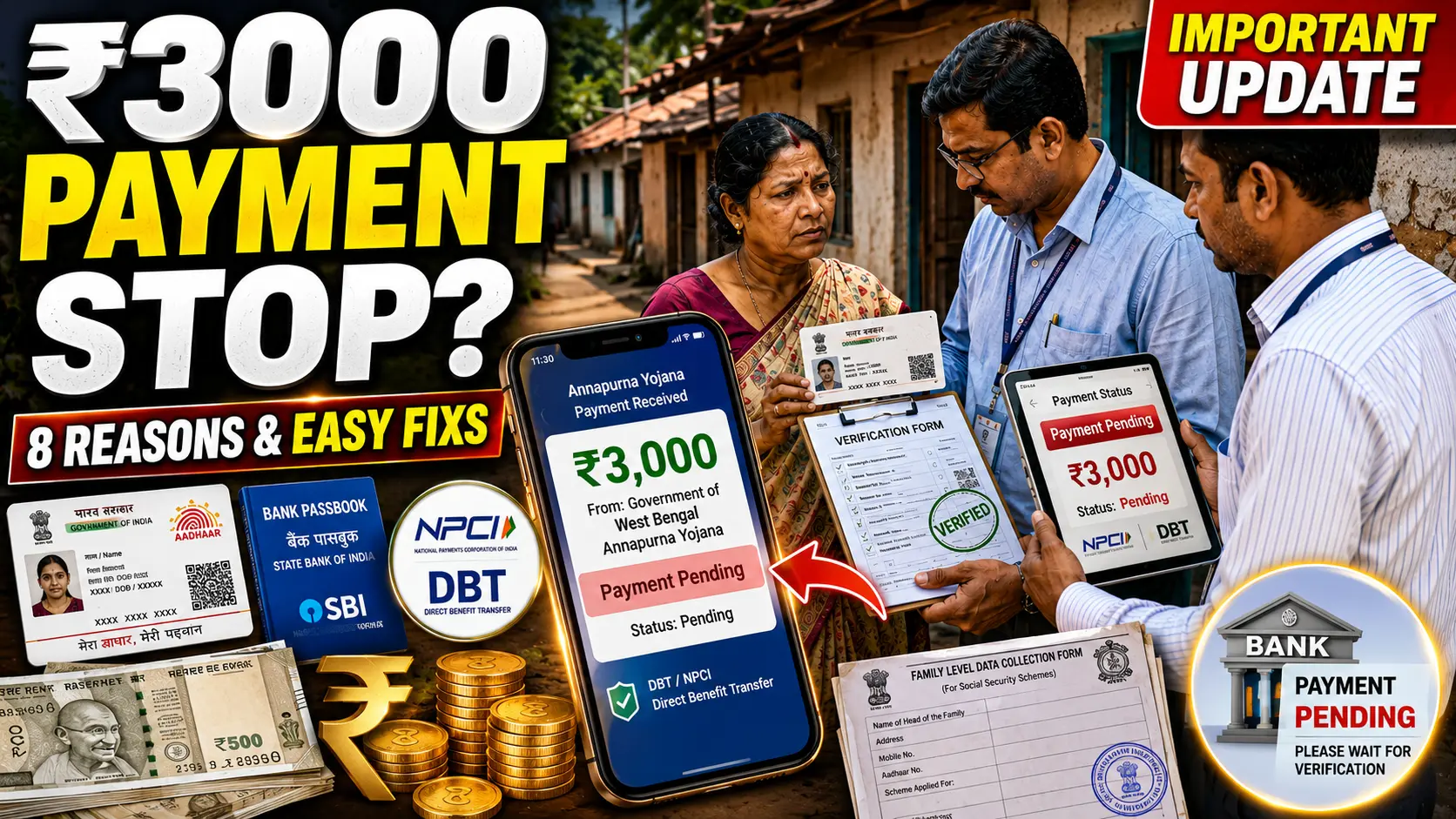

West Bengal has taken a bold step in reshaping its welfare landscape. The state government has officially introduced the Annapurna Yojana, which replaces the earlier Lakshmir Bhandar Scheme. This new scheme offers eligible women a financial benefit of Rs 3,000 and comes with stricter, more transparent eligibility rules. Moreover, the government wants to make sure that this money reaches only those families who truly deserve it. So, if you are a woman residing permanently in West Bengal and fall between 25 and 60 years of age, this scheme could be a game changer for your household.
What is Annapurna Yojana and Why Did West Bengal Launch It
The Annapurna Yojana is a direct benefit transfer scheme launched by the West Bengal Government to provide financial support to economically vulnerable women. Additionally, it replaces the Lakshmir Bhandar Scheme, which was the earlier welfare programme for women in the state. The core benefit remains financial assistance, but now the amount has been revised to Rs 3,000 per eligible beneficiary.
Furthermore, the government has introduced a completely revamped eligibility framework. The objective is simple: to plug the leakages in welfare delivery and ensure that every rupee reaches the right household. Consequently, new conditions around child vaccination, school enrollment, and family income have been added to the application process. This makes the scheme more accountable and data-driven than its predecessor.
Annapurna Yojana Key Details at a Glance
| Feature | Details |
|---|---|
| Scheme Name | Annapurna Yojana |
| State | West Bengal |
| Benefit Amount | Rs 3,000 financial assistance |
| Beneficiaries | Eligible women aged 25 to 60 years |
| Replaced Scheme | Lakshmir Bhandar Scheme |
| Mode of Transfer | Direct Benefit Transfer (DBT) via Aadhaar-linked bank account |
Annapurna Yojana Eligibility Criteria You Must Know
To benefit from this scheme, applicants must meet a clear set of conditions. First and foremost, the applicant must be a permanent resident of West Bengal. In addition, she must fall within the age bracket of 25 to 60 years. Moreover, she needs to hold an Aadhaar-linked bank account to receive the payment through the Direct Benefit Transfer system.
Beyond these basic requirements, applicants must also submit accurate family income details and complete the verification process honestly. Therefore, any false information provided during the application can lead to immediate disqualification. The government has made it very clear that transparency is a non-negotiable part of this scheme.
Who is Not Eligible for Annapurna Yojana
The West Bengal Government has drawn a clear line on who cannot apply for this scheme. Notably, the following categories of individuals will not receive benefits under Annapurna Yojana:
Government employees and pensioners are excluded since they already receive state support. Similarly, income taxpayers are not eligible, as the scheme targets economically weaker sections. Furthermore, non-Indian residents will have no claim to this benefit, regardless of their current location in West Bengal.
In addition, individuals who have married three times will not qualify. Families that refuse mandatory government vaccinations for their children may also face disqualification. On the other hand, families that shift their children from government schools to certain religious educational institutions may lose their eligibility as well. Consequently, the scheme ties welfare benefits directly to compliance with government health and education policies.
New Eligibility Rules That Make Annapurna Yojana Different
One of the most talked-about aspects of this scheme is its new and stricter eligibility conditions. Unlike its predecessor, Annapurna Yojana links financial benefits to a family’s behaviour around child health and education. Moreover, this approach sends a clear policy signal: the government wants welfare support to drive better outcomes for children and society overall.
For instance, families must ensure that their children receive all mandatory government vaccinations. Additionally, children must remain enrolled in government or government-aided schools rather than being moved to private or certain religious institutions. Therefore, the scheme is not just about money transfer. It is equally about encouraging families to participate actively in public health and education systems.
Annapurna Yojana Application Form Requirements
When applying for the scheme, families need to furnish several important documents and details. Here is a clear breakdown of what the application form requires:
| Required Information | Details |
|---|---|
| Child Immunisation Status | Vaccination details for up to four children |
| School Type of Children | Government, Government-Aided, Private, or Madrasa |
| Other Welfare Schemes | Details of any existing government benefits the family receives |
| Family Income | Household income and financial information |
| Bank Account Details | Aadhaar-linked account for Direct Benefit Transfer |
Moreover, the form collects data that allows the government to cross-verify eligibility across multiple databases. Therefore, applicants must ensure that every detail they provide is accurate and up to date. Any inconsistency can delay or cancel the application entirely.
Government’s Objective Behind Annapurna Yojana
The West Bengal Government has outlined a multi-pronged goal behind launching this scheme. First, it wants to ensure that benefits reach genuinely deserving families rather than those who exploit the system. Additionally, the scheme aims to improve child immunisation coverage across the state by making it a condition for eligibility.
Furthermore, the government seeks to encourage participation in public education and reduce the drift of students away from government schools. Consequently, Annapurna Yojana becomes a tool not just for financial relief but also for strengthening public health and education infrastructure. In addition, by linking Aadhaar accounts to the scheme, the state aims to build greater transparency in welfare distribution and reduce corruption at every level.
Important Note for Applicants
It is important to clarify that the information above reflects the reported announcement of the scheme as shared by official sources. However, the final eligibility conditions, application process, and implementation timeline will depend on the official notification and guidelines issued by the West Bengal Government. Therefore, applicants should regularly check the official West Bengal government portal or their nearest government office for the most updated and verified information before applying.
Disclaimer: This article is based on publicly available reports regarding the Annapurna Yojana. The administrative inquiry is ongoing, and official findings may change as further information becomes available.